
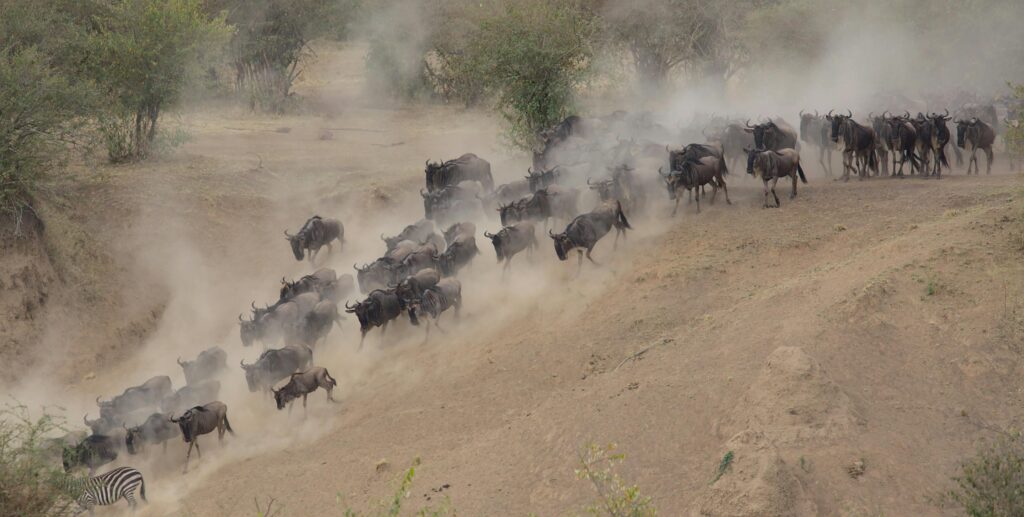
Your Complete Guide to Nature’s Greatest Wildlife Spectacle
If you’ve ever dreamed of witnessing one of the most extraordinary wildlife events on the planet, the Great Wildebeest Migration should sit firmly at the top of your travel bucket list. Every year, more than two million wildebeest, zebras, and gazelles embark on an epic journey across Tanzania’s Serengeti National Park and Kenya’s Masai Mara National Reserve in search of fresh grazing land and life-giving rainfall.
This incredible natural phenomenon is often described as the greatest wildlife show on Earth, attracting safari enthusiasts, photographers, nature lovers, and first-time visitors from around the globe. From dramatic river crossings and predator encounters to the heartwarming sight of thousands of newborn calves taking their first steps, the Great Migration offers unforgettable experiences at every stage of its journey.
But one question remains for most travellers:
Where exactly is the Great Migration, and when is the best time to see it?
The answer isn’t quite as simple as looking at a calendar. Unlike many wildlife events, the migration follows seasonal rainfall patterns rather than fixed dates. The herds move continuously throughout the year, creating a circular route that spans hundreds of kilometres across East Africa.
Understanding this movement is the key to planning the ultimate migration safari.
What Is the Great Wildebeest Migration?
The Great Migration is a year-round movement of wildebeest, zebra, Thomson’s gazelle, and other grazing animals across the Serengeti-Mara ecosystem. Driven by instinct and the search for nutrient-rich grasslands, these animals follow the rains in a continuous cycle that has existed for thousands of years.
The migration involves:
- Over 1.5 million wildebeest
- More than 300,000 zebras
- Hundreds of thousands of gazelles
- Numerous predators including lions, cheetahs, leopards, hyenas, and crocodiles
The journey covers approximately 1,800 miles (2,900 kilometres) annually and is considered the largest terrestrial mammal migration on Earth.
However, the migration is about far more than movement. It is a constant battle for survival. Predators shadow the herds, river crossings test the animals’ courage, and changing weather conditions dictate every step of the journey.
This unpredictability is precisely what makes witnessing the migration such a remarkable safari experience.
Great Migration Month-by-Month Guide
Although nature never follows an exact schedule, the migration generally follows a predictable route. Understanding where the herds are likely to be throughout the year will help you choose the perfect safari destination and timing.
January to March: Calving Season in the Southern Serengeti
The migration year begins in the southern Serengeti and the Ndutu Conservation Area. The nutrient-rich grasslands created by seasonal rains provide ideal conditions for calving.
During a period of just a few weeks, more than 500,000 wildebeest calves are born.
What to Expect
- Vast plains filled with newborn wildebeest
- Exceptional predator activity
- Stunning photography opportunities
- Beautiful green landscapes
- Family-friendly wildlife viewing
Calving season offers one of the most emotional safari experiences imaginable. Newborn calves can stand and run within minutes of birth, a vital survival skill in a landscape filled with predators.
For wildlife photographers and nature enthusiasts, this is one of the most rewarding times to visit Tanzania.
April to June: The Long Journey North Begins
As the long rains continue, the herds begin moving northwest through the central Serengeti toward the Western Corridor.
This stage is often overlooked by travellers, but it offers a more authentic and less crowded safari experience.
What to Expect
- Massive columns of migrating animals
- Fewer tourist vehicles
- Excellent predator sightings
- Dramatic thunderstorm landscapes
- Authentic wilderness experiences
The migration stretches over enormous distances during these months, creating incredible opportunities to witness the scale of this natural event.
June to July: The Grumeti River Crossings
As the herds reach the Western Corridor, they encounter the Grumeti River.
While often overshadowed by the famous Mara River crossings, the Grumeti crossings can be equally dramatic. Giant Nile crocodiles lurk beneath the water’s surface, waiting patiently for opportunities created by the crossing herds.
Highlights
- River crossing action
- Crocodile encounters
- Excellent wildlife photography
- Fewer crowds than northern crossing areas
This period represents a fascinating transition as the migration continues its relentless push northwards.
July to October: The Legendary Mara River Crossings
For many safari travellers, this is the ultimate migration experience.
The northern Serengeti and Kenya’s Masai Mara become the stage for one of nature’s most dramatic spectacles: the Mara River crossings.
The herds gather at steep riverbanks. Thousands hesitate. Some retreat. Others surge forward. Suddenly, panic turns to momentum as hundreds of animals leap into crocodile-filled waters.
What Makes This So Special?
- Massive river crossings
- Intense predator interactions
- Iconic wildlife photography opportunities
- Extraordinary safari experiences
- World-famous migration viewing
Every crossing is different.
Some happen quickly. Others involve hours of indecision before a single wildebeest sparks a chain reaction that sends thousands plunging into the river.
No documentary can fully prepare you for witnessing this event in person.
November to December: The Return South
As short rains arrive across the southern Serengeti, the migration begins its return journey.
The herds leave Kenya and northern Tanzania, moving steadily south toward the nutrient-rich plains where the cycle will begin again.
What to Expect
- Large moving herds
- Excellent game viewing
- Beautiful green landscapes
- Fewer safari crowds
- Fantastic photographic conditions
This period offers an excellent balance of migration activity and peaceful safari experiences.
Where Is the Best Place to Stay During the Great Migration?
Timing is only part of the equation.
The migration covers a vast ecosystem, and staying in the wrong region can place you hundreds of kilometres away from the main herds.
Choosing accommodation based on migration movements is one of the most important decisions you’ll make when planning your safari.
Mobile Migration Camps
One of the most effective ways to maximise your wildlife viewing opportunities is by staying in mobile safari camps.
These environmentally sensitive camps relocate throughout the year to remain close to migration hotspots.
Benefits include:
- Front-row migration viewing
- Expert guides
- Fewer crowds
- Exceptional wildlife encounters
- Comfortable luxury accommodation
Many safari veterans consider mobile camps the ultimate migration experience.
Permanent Luxury Lodges
For travellers seeking maximum comfort and amenities, strategically positioned luxury lodges throughout the Serengeti and Masai Mara offer excellent migration access while providing premium accommodation, fine dining, and world-class service.
Why the Great Migration Is One of Africa’s Best Safari Experiences
Africa offers countless wildlife adventures, but few compare to the scale and drama of the Great Migration.
Unlike traditional safaris that focus on individual sightings, the migration immerses you in an ecosystem-wide event involving millions of animals.
It combines:
- Wildlife abundance
- Predator action
- Spectacular landscapes
- Natural drama
- Conservation significance
The experience changes constantly from day to day and season to season, making every migration safari unique.
Many travellers describe it as one of the most profound wildlife experiences of their lives.
Frequently Asked Questions About the Great Migration
What is the best month to see the Great Migration?
There is no single best month. January to March is ideal for calving season, while July to October is best for witnessing the famous Mara River crossings.
How long does the Great Migration last?
The migration is a continuous, year-round cycle that never truly stops.
Is the migration guaranteed?
No. The migration follows rainfall patterns, making exact timing unpredictable. However, experienced safari planning greatly improves your chances of being in the right location.
Is Kenya or Tanzania better for the Great Migration?
Both offer incredible experiences. Tanzania hosts the migration for most of the year, while Kenya provides access to the iconic Mara River crossing season.
How many animals participate in the Great Migration?
Approximately two million animals, including wildebeest, zebras, gazelles, and accompanying predators.
Ready to Plan Your Great Migration Safari?
Planning a successful Great Migration safari requires expert timing, local knowledge, and a deep understanding of animal movement patterns.
Having spent years exploring the Serengeti and Masai Mara ecosystems, I help travellers choose the right destinations, camps, and travel dates to maximise their chances of witnessing this extraordinary event.
Whether you dream of seeing newborn calves on the southern plains, photographing dramatic river crossings, or simply experiencing one of nature’s greatest spectacles, I can help create a safari tailored to your goals.
The Great Migration is one of the world’s most remarkable wildlife experiences.
Now is the perfect time to start planning your African adventure.