
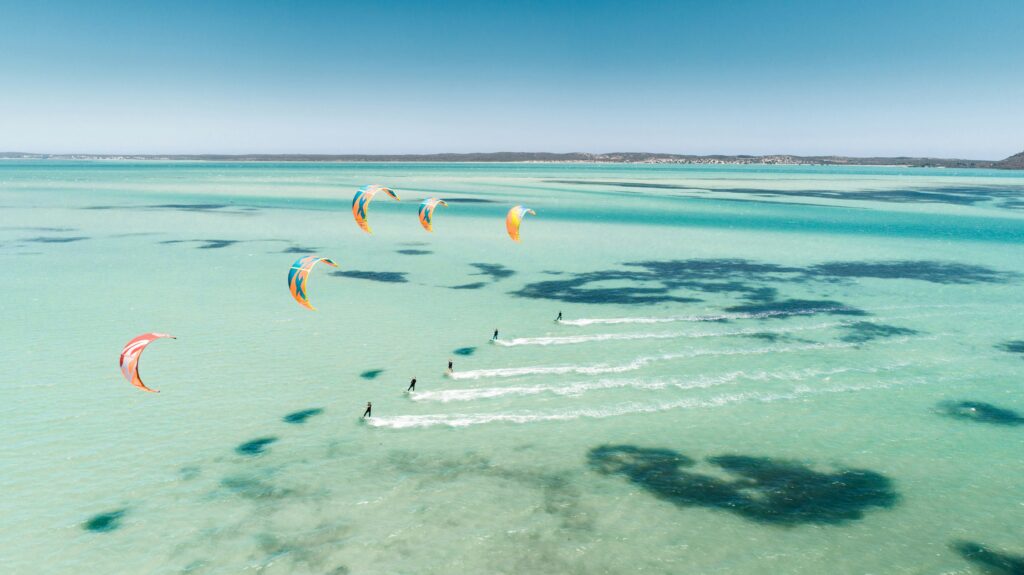
Kite Surfing Holidays: Let me guess… you’ve seen someone gliding effortlessly across turquoise water, powered only by the wind, and thought, “I want a bit of that.”
Well, you’re in the right place. I’m going to walk you through everything you need to know about kite surfing holidays, from what it actually is (spoiler: it’s addictive), to where you should go each month, what to pack, and how to get started without accidentally launching yourself into next Tuesday.
By the end of this, you won’t just want to try kite surfing… you’ll be mentally packing your bags.
What is Kite Surfing (and Why is Everyone Obsessed)?
Kite surfing, or kitesurfing, is a wind-powered water sport where you stand on a board and are pulled across the water by a large controllable kite. Think surfing meets wakeboarding meets flying a giant kite… with a splash of adrenaline.
The main styles of kite surfing:
- Twin-tip riding
This is the most common style. You ride a symmetrical board and can go in both directions without turning it around. Perfect for beginners and freestyle tricks. - Directional (surf-style)
Similar to surfing, this uses a surfboard-style board. Ideal for wave riding and pretending you’re in a slow-motion travel advert. - Foil kitesurfing
Now we’re getting fancy. A hydrofoil sits under your board and lifts you above the water. It feels like flying and works brilliantly in lighter winds. Also makes you look like you know what you’re doing (even if you don’t).
A Quick History Lesson (Don’t Worry, It’s Interesting)
Kite surfing didn’t just appear overnight with Instagram influencers.
It actually started in the late 1970s and 80s, when a couple of French brothers experimented with kite-powered water sports. Fast forward to the late 1990s, and the sport really took off (literally and figuratively).
By the early 2000s, it had exploded worldwide, with dedicated schools, competitions, and a global community of wind-chasers who will happily plan their entire lives around a weather forecast.
How Do You Start Kite Surfing?
Short answer: not by just buying a kite and hoping for the best.
Long answer: here’s exactly what you should do.
Step-by-step beginner approach:
- Book lessons with a certified school
This is non-negotiable. You’ll learn safety, control, and how not to become a human kite. - Start on land first
You’ll practise flying a training kite before heading into the water. - Progress to water sessions
This includes body dragging (don’t worry, it’s part of the process) and eventually getting up on the board. - Consistency is key
Most people need around 8–12 hours of lessons to get up and riding.
Pro tip (from someone who’s seen it all):
You will crash. You will swallow seawater. You will question your life choices. Then suddenly… it clicks. And you’ll be hooked for life.
Kite Surfing Competitions Around the World
If you like a bit of spectacle (or just want to watch professionals make it look unfairly easy), competitions are worth planning your trip around.
Major annual competitions:
- GKA Kite World Tour
Locations change each year but typically include Brazil, Cape Verde, Spain, and Morocco.
2026–2027 locations are expected to rotate across wind hotspots globally. - Red Bull King of the Air
Held in South Africa, usually in Cape Town. Big air, big jumps, big drama. - Kite-Surf World Cup (various disciplines)
Includes freestyle, wave, and big air competitions across Europe, South America, and Asia. - Tarifa Kite Pro
Spain’s wind capital hosts regular high-level competitions.
These events are brilliant to combine with a holiday. You get the buzz of the sport, plus plenty of inspiration (and possibly a mild ego crisis).
Where to Kite Surf by Month (Your Year-Round Wind Calendar)
Timing matters. Wind is everything.
Here’s your cheat sheet:
January to March
- Cape Town, South Africa
- Brazil (north coast)
- Caribbean (Barbados, Dominican Republic)
April to June
- Morocco
- Egypt (Red Sea)
- Greece begins to warm up
July to September
- Tarifa, Spain
- Greek Islands
- Turkey
- Zanzibar
October to December
- Brazil (prime season)
- Mauritius
- Cape Verde
- Sri Lanka
If you’re thinking “I’ll just go anywhere and hope for wind,” don’t. That’s how you end up drinking cocktails watching other people kite instead.
What to Pack for a Kite Surfing Holiday
Packing for kite surfing is a fine balance between being prepared and looking like you’re relocating permanently.
For beginners (no gear yet):
- Swimwear (you’ll live in it)
- Rash vestor lightweight top
- Sunglasses with a strap (trust me)
- Ocean friendly high SPF sunscreen
- Flip flops or water shoes
- A healthy sense of humour
Most schools provide equipment, so you can travel light.
For riders with their own gear:
- Kite(s) suitable for expected wind conditions
- Pump
- Control bar and lines
- Board (twin-tip, directional, or foil)
- Harness
- Wetsuit or impact vest depending on destination
- Repair kit (because things will break at the worst time)
- Travel bag (and patience at the airport)
Bonus tip:
Always check baggage allowances. Kite gear has a special talent for exceeding them.
Kite Surfing Memberships Worth Knowing About
Joining a global kite community isn’t essential, but it does make life easier.
Popular memberships and organisations:
- IKO (International Kiteboarding Organisation)
Globally recognised certification system for lessons and instructors. - BKSA (British Kitesports Association)
Perfect if you’re UK-based and want insurance, training standards, and community. - VDWS (International Watersports Association)
Another widely recognised training and certification body.
Being part of these gives you access to recognised schools, safety standards, and sometimes insurance benefits.
Why Kite Surfing Holidays Are Different (In the Best Way)
Here’s the truth.
A kite surfing holiday isn’t just a holiday.
It’s early mornings checking wind forecasts.
It’s cheering strangers when they land their first ride.
It’s that moment when everything clicks and you glide silently across the water.
And yes, it’s also the occasional dramatic faceplant… but we don’t talk about those.
Ready to Ride the Wind?
If you’ve made it this far, you’re already halfway there.
All that’s left is choosing your destination, booking your lessons, and committing to an experience you’ll never forget.
And if you’d like a little help planning the perfect kite surfing holiday (with the right wind, the right location, and none of the guesswork), I’m here to make it effortless for you.